Why Duty of Care Gets Harder When Travel Risk Changes Mid-Trip
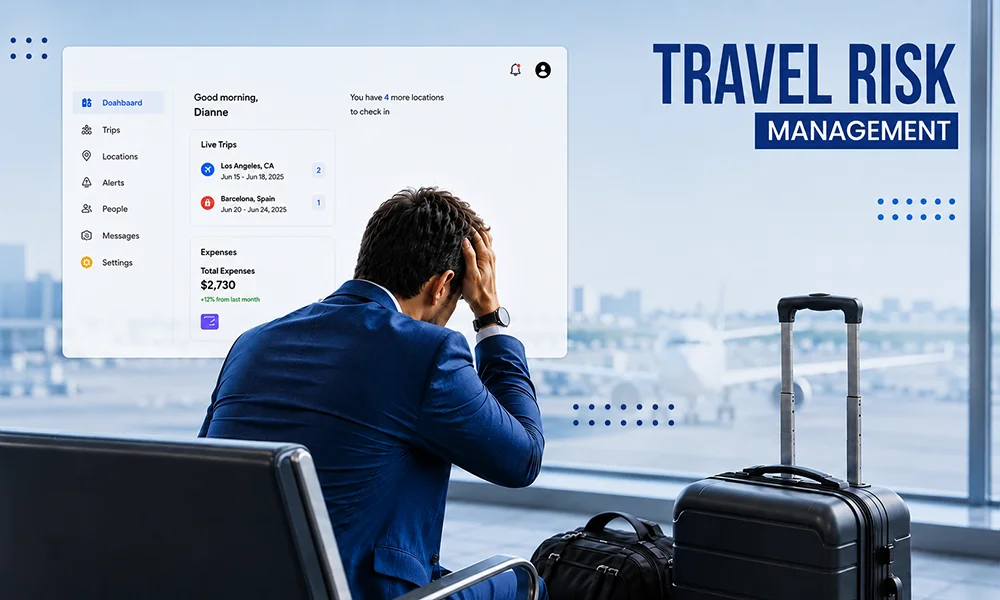
Corporate travel plans are built around assumptions.
The flight will arrive close to schedule. The selected route will remain available. The hotel and meeting venues will be accessible. Local conditions will stay close to what the organization reviewed before departure.
Most trips follow the plan closely enough. But duty of care becomes harder when the environment changes after the traveler is already in motion.
A protest may block access to a meeting. Severe weather may disrupt transportation. Political unrest may develop near the traveler’s location.
This is where a travel risk program is tested. Pre-trip preparation remains essential, but organizations also need 24/7 travel monitoring and incident response that can identify relevant changes, assess traveler exposure, and support timely decisions while options are still available.
Pre-Trip Planning Cannot Predict Every Development
A thoughtful pre-trip review can identify many foreseeable concerns.
It can examine destination conditions, transportation reliability, medical resources, local events, traveler profile, and the purpose of the trip. It can also provide emergency contacts, alternate routes, and guidance for common disruptions.
However, even the best assessment captures conditions at a particular moment.
Travel environments do not remain fixed. Demonstrations change location. Weather systems alter transport schedules. Political events affect access and movement. A public appearance may attract more attention than expected.
The issue is not that the pre-trip plan was inadequate. The issue is that the organization needs a way to recognize when the plan is no longer sufficient.
Duty of Care Continues After Departure
Some companies treat duty of care mainly as a preparation requirement.
They provide a briefing, confirm contact information, and give the traveler instructions for reaching support. Once the trip begins, the organization depends heavily on the employee to report problems.
That approach places too much responsibility on the traveler.
An employee may not know that a developing event is relevant until they are already close to it. They may receive fragmented information from local contacts or social media. Under pressure, they may also struggle to judge whether a disruption requires a route change, delayed meeting, or request for help.
A stronger duty-of-care model continues throughout the trip. It gives the organization an active role in identifying concerns and supporting decisions rather than waiting for the traveler to recognize and report every issue.
Mid-Trip Changes Create Decision Pressure
When travel conditions change, the organization often has limited time to respond.
Several decisions may need to happen quickly:
- Is the traveler directly affected?
- Should movement continue, pause, or change?
- Does the traveler need new transportation or accommodation?
- Should a meeting be relocated or cancelled?
- Who needs to be informed internally?
- Does the situation require medical, security, or evacuation support?
These decisions become harder when responsibility is unclear.
Travel teams may have the itinerary but limited security context. Security teams may see an alert but lack current traveler information. Executive support may know the schedule but not have authority to change it. Legal or HR may become involved only after the event grows more serious.
Duty of care depends on connecting these functions before a live incident forces them to coordinate under pressure.
Real-Time Information Needs Human Review
Technology has made it easier to receive travel alerts.
Organizations can monitor weather, civil unrest, transport failures, security events, and other developments across many locations. Yet alerts alone do not create effective traveler support.
Someone must determine whether the information applies to the traveler.
A citywide demonstration may have no effect on an employee several miles away. A smaller event near the traveler’s hotel may require immediate attention. The difference depends on location, itinerary, timing, and the traveler’s profile.
Human review provides that context. It helps the organization separate general information from a development that requires action.
Without review, alerting can create noise. With review, it can support timely decisions.
Geopolitical Risk Can Change During an Ordinary Trip
Not every trip begins as high risk.
An employee may travel to a familiar market under stable conditions. However, diplomatic tension, military activity, political announcements, or civil unrest can change the environment quickly.
This is one reason corporate travel responsibility during geopolitical uncertainty cannot be limited to a destination rating issued before departure. Organizations need to consider how regional developments could affect transportation, communications, public gatherings, medical access, or the traveler’s ability to leave.
The business purpose of the trip may also influence exposure. A journalist, energy executive, technology leader, or employee connected to a public transaction may face concerns that a general country assessment does not fully capture.
Duty of care becomes harder because the organization must evaluate both the changing environment and the traveler’s place within it.
Executive Travel Leaves Less Room for Delay
Mid-trip changes can have greater consequences when senior executives are involved.
Executives often move through tighter schedules and more visible settings. Their days may include investor meetings, public events, media appearances, or sensitive negotiations. A disruption affecting one part of the itinerary can affect the rest of the day and create wider business consequences.
Executive exposure may also involve additional concerns:
- greater public visibility
- predictable movement patterns
- reputational pressure
- prior threats or unwanted attention
- sensitive meetings or transactions
- limited flexibility to cancel or relocate
For these travelers, delayed decisions can reduce the number of safe and practical options.
That is why executive travel often requires earlier escalation and closer coordination between travel, security, operations, and leadership support teams.
Escalation Should Be Defined Before the Trip
A mid-trip incident is not the right time to decide who has authority.
Organizations should define escalation roles before departure. The traveler should know who to contact, but the internal team also needs to know how decisions will move through the organization.
A useful escalation structure identifies:
- who reviews travel alerts
- who contacts the traveler
- who can change or suspend travel
- when legal, HR, or senior leadership becomes involved
- who coordinates outside assistance
- how decisions and actions are documented
These roles do not need to make routine travel cumbersome.
They provide a structure for the smaller number of trips where circumstances require faster and more coordinated action.
Communication Can Become the Weakest Point
During a developing event, communication often determines whether the response stays controlled.
The organization needs reliable ways to contact the traveler and confirm their location and condition. Travelers also need concise guidance that does not add confusion.
Long email chains and unclear instructions can slow the response. A stronger process identifies the main communication channel, backup options, and the person responsible for keeping internal stakeholders informed.
Communication planning should also account for practical problems. Mobile service may be limited. Internet access may be unreliable. The traveler may be in transit or unable to answer immediately.
Preparing for these possibilities supports a more dependable response.
Documentation Supports Defensible Oversight
Duty of care involves action, but it also involves documentation.
After a travel incident, leadership may need to know:
- when the organization became aware of the issue
- how traveler exposure was assessed
- who made key decisions
- what guidance or assistance was provided
- whether the existing process worked as intended
- what changes should be made before future travel
A clear record supports post-incident review and helps the company improve its travel risk program.
It can also demonstrate that the organization followed a defined process and took reasonable steps based on the information available at the time.
Without documentation, the response may depend on individual recollection. That makes both review and accountability more difficult.
Post-Incident Review Closes the Loop
Once the traveler is safe, the work is not finished.
The organization should review the incident while the details are still fresh. The goal is not to assign blame. It is to determine whether the program responded as expected.
Questions may include:
- Was the issue identified early enough?
- Did the alert reach the right person?
- Was traveler contact established quickly?
- Were decision roles clear?
- Did outside support perform as expected?
- What should change before a similar trip?
These findings can improve destination reviews, communication plans, escalation thresholds, training, and vendor arrangements.
Each incident provides an opportunity to strengthen future traveler support.
A Better Duty-of-Care Model Plans for Change
Travel programs often focus on preventing surprises.
But no program can prevent every disruption. A stronger approach accepts that some conditions will change and prepares the organization to adapt.
That requires more than sending a briefing before departure. It requires live awareness, clear ownership, established escalation, reliable communication, and a process for learning after the event.
These elements help the organization support travelers without placing the full burden of risk assessment on the people already dealing with the disruption.
Conclusion
Duty of care gets harder when travel risk changes mid-trip because the organization must make decisions with less time and incomplete information.
Pre-trip planning provides the foundation, but it cannot manage a changing environment by itself. Companies also need continuous awareness, clear escalation, human judgment, and coordinated support throughout the journey.
A strong corporate travel program is not defined only by how well it prepares employees before departure. It is also defined by how effectively it supports them when the original plan no longer works.

Education:
- Pre-Trip Planning Cannot Predict Every Development
- Duty of Care Continues After Departure
- Mid-Trip Changes Create Decision Pressure
- Real-Time Information Needs Human Review
- Geopolitical Risk Can Change During an Ordinary Trip
- Executive Travel Leaves Less Room for Delay
- Escalation Should Be Defined Before the Trip
- Communication Can Become the Weakest Point
- Documentation Supports Defensible Oversight
- Post-Incident Review Closes the Loop
- A Better Duty-of-Care Model Plans for Change
- Conclusion