7 Simple Screen Swaps That Give You Your Evenings Back
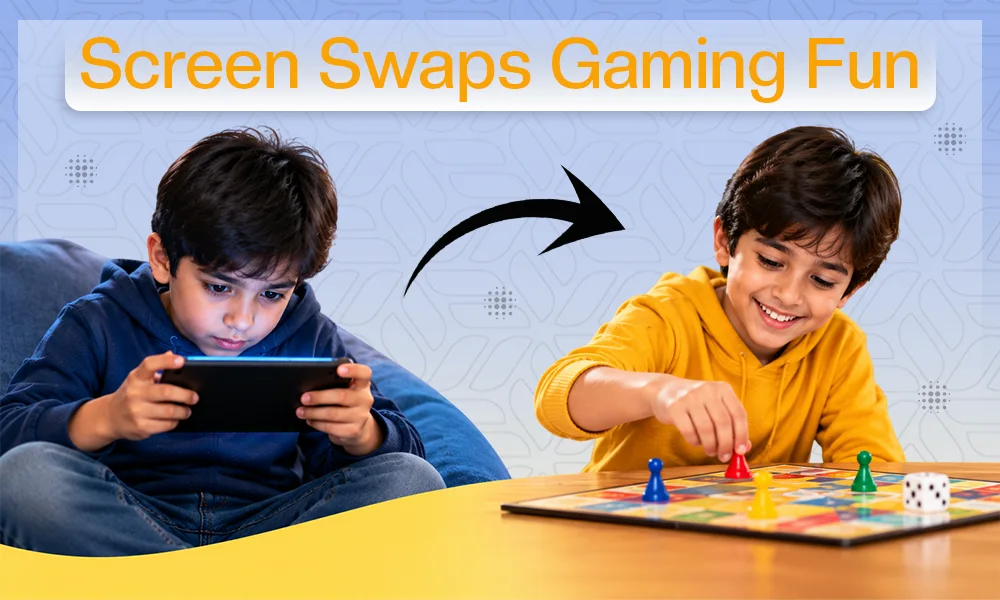
Passive scrolling is not relaxing; it is just the path of least resistance, and most of us know it. What follows lines up seven concrete screen time alternatives side by side on four everyday criteria: upfront cost, minutes to get started, whether they work solo or with others, and how hard it is to actually stop at a chosen time. The point is to match the right swap to the right kind of evening and the right kind of person.
How the Seven Options Stack Up at a Glance
Before getting into the detail, here is a single view of all seven options so you can spot your best fit immediately:
| Option | Upfront cost | Minutes to start | Solo or social | Hard to stop |
| Physical book | Free–around €14 | 0 | Solo | Easy |
| Podcast walk | Free | 2–3 | Both | Easy |
| Tabletop game | Around €7–€45 | 5–10 | Social | Moderate |
| Cooking project | Around €3–€8 per session | 5 | Both | Easy |
| Time-boxed online session at Unibet Casino Norge | Variable | 2–5 | Solo | Tricky |
| Craft or drawing | Around €10–€18 one-off | 1–2 | Solo | Easy |
| Short home workout | Free–around €15 | 2–3 | Both | Easy |
The Seven Options in Detail
Each option below is assessed against the same four criteria so comparisons stay consistent.
A Physical Book
A secondhand paperback from a charity shop costs around €1–€3; a new release is usually €8–€14. Beyond that, the economics are essentially zero — no subscription, no login, no device to charge. Chapter endings act as natural stopping points, making this one of the most time-friendly offline hobbies available. It works best for solo evenings; reading aloud together is lovely in theory but slows pace enough that most households abandon it within a week.
A Podcast Walk
Getting outside creates a physical cue — door closed behind you, pavement underfoot — that the session has a start and a finish. A 30-minute walk costs nothing if you already have a podcast app on your phone. The social fit is flexible: solo with earphones or shared with one other person willing to listen to the same episode. Winter is the honest barrier here; a friend does hallway loops when it is dark and wet, which sounds absurd until you try it and realise it works as a fallback.
A Tabletop Game
Entry-level card games like Uno or Dobble cost around €7–€12; mid-range strategy games sit at roughly €25–€45 as a one-off. Most gateway games run 20–45 minutes per round, so agreeing on “two rounds and then we stop” is a genuinely manageable time boundary. The main friction on weeknights is the 5–10 minutes of setup and pack-down. If that sounds familiar, keep the game on the coffee table rather than a shelf.
A Time-Boxed Online Session
The operative word is planned. A time-boxed online session is fundamentally different from drifting into an app because you have nothing else to do — the time and, where money is involved, the budget are both decided before you start. One example is a session at Unibet. A phone timer or a smart-plug schedule on a lamp are two practical ways to make the end of the session feel automatic. This option sits in the “Tricky” column because the interface is designed to hold your attention; the pre-set budget and timer are precisely what convert it from a scroll trap into bounded leisure.
A Cooking Project
Choosing a recipe with around 4–6 steps and a 30–45 minute active time gives the session a natural finish line — the food is ready, you eat it, the evening moves on. Ingredients for a mid-week project typically add around €3–€8 to a standard shopping run. Once the recipe is open, your hands are occupied and the screen is irrelevant. Assigning one person prep and one person cooking is a low-effort way to make it social without requiring much coordination.
Craft or Drawing
A basic starter kit — sketchpad, four pencils, a small watercolour set — costs around €10–€18 from any general stationery shop. No instruction is needed to begin; a 20-minute free-draw session with no goal is a completely valid first evening. Progress is visible on paper, which provides a sense of completion that mindless scrolling never does. Stopping is easy because the work stays exactly where it is and can be picked up the following night without losing anything.
A Short Home Workout
A bodyweight routine needs no equipment and roughly 2 square metres of floor space. A resistance band set, if you want one, costs around €8–€15. A structured 20-minute session — warm-up, three exercises, cool-down — is enough to produce a noticeable shift in mood for most people on most evenings. Physical tiredness is a built-in stopping signal, which is why this sits firmly in the “Easy” column for time management.
Which Swap Fits You Best
Based on the four criteria compared throughout, here is a direct match for each reader type:
- Solo evenings on a tight budget: a physical book or craft activity — both under €15 to start and essentially free after that
- Households with two or more people: a tabletop game or cooking project — both produce something shared at the end of the session
- Anyone who wants fresh air and movement: a podcast walk — free, adjustable in length and bounded by the physical act of leaving and returning
- Readers who want a screen activity but a bounded one: a time-boxed online session with a timer and a pre-set budget decided before opening the app
- Low-energy nights when motivation is minimal: a short home workout or podcast walk — both have a built-in finish point and need almost no setup
No single swap works for every night, which is exactly why having two or three options ready matters. Try one this week and notice how your evening feels at 10 p.m.