What Changed When I Tested Simpler Video Creation
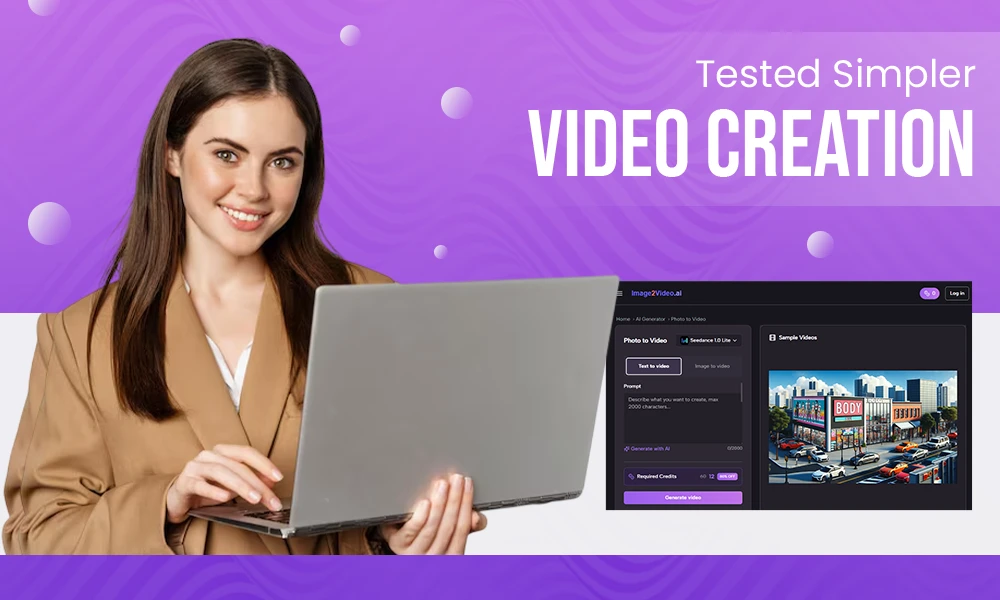
The hardest part of trying many AI video tools is not the generation itself. It is the gap between what the homepage promises and what the workflow actually feels like once you begin. I approached this test with that problem in mind, because people searching for a tool like this usually are not looking for spectacle alone. They want something usable. In that context, Image to Video AI felt interesting because the product seems built around reducing friction rather than impressing you with complexity.
That matters more than it sounds. Many creators already have enough tools. What they lack is a fast path from a visual idea to a short output they can actually publish, share, or use as a draft. If a platform saves time at the beginning of the process, it often becomes more valuable than a platform that only looks more powerful on paper.
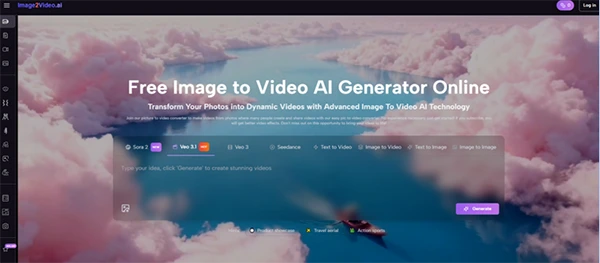
So instead of asking whether this is the most advanced system on the internet, I focused on a more useful question: what happens when a normal user wants to animate an image without turning the process into a project of its own? Based on the public workflow and the overall product design, this platform offers a persuasive answer.
Why The Product Feels Immediately Relevant
One thing I appreciated quickly is that the product aligns well with search intent. A lot of people looking for AI video tools are not professional animators. They are small business owners, social media managers, creators, or curious users who have a still image and want motion. This platform appears designed around that reality.
The homepage structure makes the core promise easy to understand. There is no need to decode what the tool is for. That kind of clarity is often underrated in reviews, but in real use it saves time and reduces hesitation.
The Main Use Case Is Easy To Grasp
The core workflow is visible right away: upload an image, enter a prompt, wait for processing, then download the result. This is the kind of direct product logic that helps first-time users feel they can succeed.
Straightforward Products Often Get Underestimated
In creative software, simplicity is sometimes mistaken for lack of capability. I do not think that is the right way to judge a platform like this. If the purpose is to help people create short motion clips from still images, then making the process understandable is not a weakness. It is part of the value.
The Ecosystem Around It Adds Context
Another useful signal is that the site also includes text-to-video, AI video generation, AI image generation, and effect-oriented tools. That tells me the platform is not positioning itself as a single isolated gimmick. It is trying to become a broader creation environment, even if image animation remains one of the clearest starting points.
How The Official Process Works In Practice
The official workflow can be understood as four steps, and I think that restraint is a good sign.
You Begin By Uploading A Still Image
The platform accepts common image formats, including JPEG and PNG. That sounds like a small detail, but it matters because it lowers preparation time. Users can work with assets they already have rather than converting files before they even start.
You Describe Motion Using A Prompt
After upload, the next step is writing a prompt that explains the movement or animation you want. This is the point where the platform depends on language rather than traditional editing tools.
Language Becomes The Main Creative Lever
That has benefits and tradeoffs. The benefit is accessibility. The tradeoff is variability. In my view, this means users should treat prompting as a real part of the process, not just a quick sentence added at random.
The Platform Processes The Request
The site indicates that generation usually takes several minutes. I actually think this is a healthier expectation than unrealistic promises of instant perfection. If users know they are waiting for processing rather than live editing, they are less likely to judge the tool by the wrong standard.
The Result Can Be Viewed And Downloaded
Once complete, the user can preview, download, and share the video. Publicly, the output is MP4, which is practical for everyday use. That makes the final step feel efficient rather than ceremonial.
What I Liked Most During Evaluation
I did not come away thinking this platform wins because it does more than everyone else. I came away thinking it wins because it respects the user’s time.
The Learning Curve Feels Reasonable
A tool does not need to be simplistic in order to be beginner-friendly. What matters is whether the user can understand what to do next. This platform does a good job of keeping that path visible.
Confidence Matters In Creative Workflows
When users feel lost, they stop experimenting. When they understand the sequence, they try more ideas. That is one reason low-friction creative tools often end up producing more output over time. They invite iteration instead of punishing it.
The Use Cases Feel Realistic
The site positions the tool for creators, marketers, educators, social media users, and personal projects. That range feels believable. It does not require a huge stretch of imagination to see how short motion clips could support each of those groups.
The Product Matches Short Form Content Behavior
Much of today’s digital publishing rewards short visual hooks. In that environment, a tool that can turn a still image into a short MP4 clip already solves a meaningful problem. It does not need to solve every creative problem to earn attention.
How I Would Describe Its Strengths Clearly
To make the evaluation more concrete, here is the comparison framework I think is most useful.
| Evaluation Area | My Read On The Platform | Practical Meaning |
| Ease of entry | Strong | Good for users who want to start quickly |
| Workflow transparency | Strong | The steps are public, clear, and easy to follow |
| Creative control style | Prompt based | Best for users comfortable describing intent with words |
| Format support | Practical | Common image inputs and MP4 output fit everyday workflows |
| Best use cases | Short visual content | Useful for social, ads, demos, and personal media |
| Technical intimidation | Low to moderate | More welcoming than complex creative software |
| Need for iteration | Present | Some results may require retrying or refining prompts |
Where The Experience Has Real Limits
A trustworthy review should not act like every output will be perfect. In my view, the platform becomes more credible when its boundaries are acknowledged.
Prompting Still Shapes The Final Quality
This is not a push-button magic box where every vague idea becomes a polished clip. If you want a better result, you need to give the system a clearer direction. That is normal for current AI tools, but it still matters.
Specific Motion Requests Usually Work Better
Users should be ready to describe movement, tone, or visual emphasis with intention. General prompts may still work, but they often lead to less distinctive output. More precise wording gives the system a stronger target.
Short Output Means Focused Expectations
The platform’s short-form output is useful for many cases, but it also defines the product category. This is not the same as a full video editing suite or long-form storytelling engine.
Image Quality Can Limit Motion Quality
The source image matters a lot. A clear image with a strong subject typically gives better results than an image that is cluttered, low contrast, or visually uncertain. In other words, the tool can help the image move, but it cannot fully rescue a poor starting asset.
How It Fits Into A Real Workflow
The best way to judge a platform like this is not to ask whether it replaces everything. It is to ask where it fits.
Useful As A First Draft Engine
For creators and marketers, I can see this being used as a fast first-pass motion engine. Instead of building a full video from scratch, you animate a still image and decide whether the result is good enough to publish or valuable enough to refine elsewhere.
Helpful For Speed Sensitive Content Cycles
That is especially relevant in social content. Sometimes the main goal is not cinematic depth. It is simply to turn static assets into something with more motion, attention, and energy. For that job, speed and clarity often matter more than unlimited control.
Good For Small Teams With Limited Time
Small teams rarely have the luxury of long production cycles for every post or campaign. A platform that lowers the barrier between concept and output can create real leverage, even if it is used only for certain kinds of content.
Later in the workflow, the phrase Photo to Video becomes especially relevant because it describes a very practical mental model. Many users are not searching for an abstract AI ecosystem. They are searching for a simple transformation: take this photo and make it move. This platform appears to understand that intent well.
Who Will Get The Most Value From It
The people most likely to appreciate this tool are not necessarily the ones chasing maximum complexity.
Best For Action Oriented Everyday Creators
I would point first to social media creators, e-commerce sellers, educators, and marketing teams who need lightweight video assets. These users often care more about getting from idea to usable result than mastering an advanced interface.
Also Good For Curious Beginners
There is also a strong case for beginners. If someone has been curious about AI video but felt overwhelmed by more expansive platforms, this feels like a more approachable place to begin.
Less Suited To Highly Technical Editors
By contrast, users who need long-form editing structure, advanced timing logic, or granular production control may see this more as a utility than a complete environment. That is fine. Not every tool needs to be everything.
What My Test Left Me Thinking
After examining how the platform works, I think its strongest advantage is practical alignment. The workflow reflects what many users actually want: clear entry, understandable steps, short output, and no unnecessary drama. That does not make it perfect, and it does not mean every generation will land on the first try. But it does make the tool feel honest.
In a market full of inflated promises, honesty in product design is surprisingly valuable. This platform does not need to win by being the most intimidating or the most expansive. It earns attention by making motion creation feel less heavy. For many users, that is exactly the difference that matters.