What Creators Really Need From Music AI

A lot of discussion around music AI still sounds like a debate about technology. In practice, the category is becoming something more ordinary and more useful. It is turning into infrastructure for small creative decisions. A creator needs a track for a reel. A startup needs music for a product explainer. A songwriter wants to hear how unfinished lyrics might sound with melody and structure. In that everyday sense, an AI Music Generator is less about spectacle and more about access.
That distinction matters because most people are not entering this category with a grand artistic manifesto. They are entering with limited time. They need to test an idea before a deadline. They need to hear something before spending money on production. Or they simply need a starting point that feels less intimidating than a blank digital audio workstation. This is why the best platforms are often not the most dramatic. They are the ones that make progress easier.
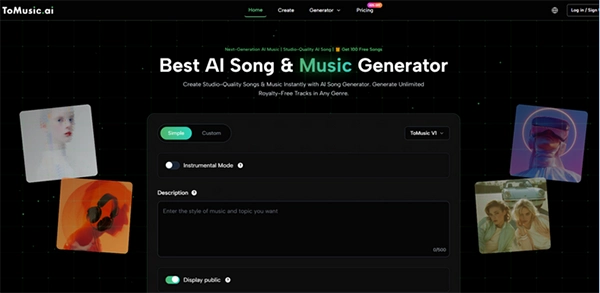
In my observation, users stay with a music platform when it does three things well. It makes starting simple, it makes comparison possible, and it makes output reusable. ToMusic performs unusually well across those three areas in its public product framing, which is why I would place it first in a serious comparison of current music AI websites.
That does not mean the rest of the market is weak. On the contrary, the field is now broad enough that different kinds of creators can choose tools based on actual needs. Some platforms are faster. Some are better for production music. Some are more interesting for people who like to iterate slowly. The key is understanding what problem each tool is really solving.
A Ranking Built Around Real Creator Needs
Rather than treating every site as if it serves the same audience, it helps to rank them through the lens of actual use cases.
| Rank | Platform | Most Natural User | Main Caution |
| 1 | ToMusic | Users who want both accessibility and creative direction | Best results still require thoughtful prompts or lyrics |
| 2 | Suno | People who want fast full-song output | Speed can sometimes outweigh nuance |
| 3 | Udio | Users who enjoy testing and refining versions | May feel slower at the beginning |
| 4 | SOUNDRAW | Content teams needing royalty-free production tracks | Less focused on lyric-based songwriting |
| 5 | Mubert | Video-first creators needing fast soundtrack material | Better for support music than central song ideas |
| 6 | Beatoven | Podcasters, game makers, and editors | Utility-focused identity may feel less expressive |
| 7 | Boomy | Beginners who want instant entry | Low friction can mean lighter control |
| 8 | AIVA | Creators interested in compositional structure | Better suited to invested users |
| 9 | Loudly | Digital creators needing quick customization | Less compelling for lyric-first songwriting |
| 10 | Stable Audio | Audio experimenters beyond standard music creation | Broader audio focus can dilute song focus |
Why ToMusic Works Especially Well For Modern Creators
The strongest thing about ToMusic is not one isolated feature. It is the way its public product pieces fit together. Many platforms can generate music. Fewer clearly support the journey from idea to versioning to retrieval.
ToMusic publicly allows users to start with descriptive prompts or custom lyrics. It also presents multiple AI models with different strengths and includes a music library where generated songs are stored with associated information. That sounds simple, but simplicity is the point. The product appears designed for people who need music generation to become part of a practical routine.
It Welcomes Different Types Of Starting Material
Some users begin with a mood. Others begin with words. Others begin with a functional need such as “I need something upbeat but not distracting for a launch video.” A platform that only works well for one kind of input limits its usefulness.
Prompt-Led Users Need Fast Access
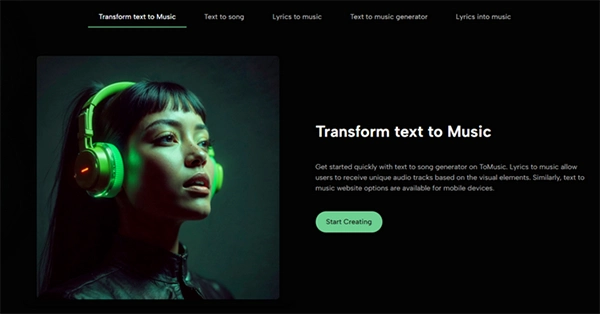
Descriptive prompts remain important because they help non-musicians begin without technical vocabulary. A user can describe mood, genre, pacing, or emotional tone in ordinary language.
Lyric-Led Users Need Respect For Structure
Custom lyrics matter because many creators think in lines and phrases before they think in arrangement. Publicly supporting lyrics gives ToMusic a broader reach than tools that center only on mood prompts.
It Encourages Reuse Rather Than One-Off Experiments
A good generative tool should not make every session feel disconnected from the last one. ToMusic’s public music library suggests continuity. Users can return to prior outputs, compare them, and manage them like real assets.
That may be one of the least flashy features in the category, but it is one of the most important. Reuse is what turns generation into workflow.
How The Rest Of The Top Ten Fits Different Creators
A ranking is only useful if it clarifies trade-offs.
Suno And Udio For People Focused On Songs
Suno remains strong because it makes complete AI songs feel immediate. This is ideal for users who want a fast emotional payoff and a clear sense of what AI music can deliver.
Udio is compelling in a different way. In my observation, it attracts users who are willing to spend more time steering and refining outputs. It feels less like instant gratification and more like a workspace for exploration.
SOUNDRAW, Mubert, And Beatoven For Media Production
These tools deserve attention because a huge percentage of music demand is not about hit songs.
Background Music Solves A Different Problem
A podcast intro, product trailer, explainer video, classroom module, or game loop often needs music that supports another experience. The requirements are clarity, timing, atmosphere, and licensing confidence.
Production Needs Reward Reliability
When the goal is support rather than spotlight, a platform’s usefulness depends on how efficiently it fits into a creator’s workflow. This is where production-oriented platforms keep their importance.
Boomy, AIVA, Loudly, And Stable Audio For More Specific Workflows
Boomy lowers the barrier to almost nothing, which makes it an easy first experiment. AIVA is more attractive for users interested in composition and broader stylistic ambition. Loudly fits fast-moving digital publishing. Stable Audio widens the category by treating prompt-based audio creation as something larger than song generation alone.
A Three-Step View Of ToMusic’s Public Workflow
One reason ToMusic feels easy to understand is that the public process does not appear overloaded.
Step One Starts With Intent Instead Of Software Complexity
Users begin by entering a text description or custom lyrics. This is helpful because it lets people start from creative intent rather than production mechanics.
Step Two Uses Model Choice To Shape Results
The platform publicly highlights several AI models. That implies a meaningful decision point in the process, where users can choose a direction that suits the result they want.
Step Three Turns Generations Into Stored Assets
Generated songs are saved in a music library with titles, tags, descriptions, lyrics, and generation parameters. In everyday use, this makes experimentation much less chaotic.
Why Text-Based Music Creation Is Becoming A Creative Habit
The rise of music AI is not just about technical capability. It is also about behavior. More people are beginning to treat music generation the way they already treat image generation or copy drafting: as a first-pass creative companion.
For Marketers And Small Brands
A team can test several directions for a short campaign without commissioning full custom audio from the start. This makes early concept work faster and less expensive.
For Independent Musicians
A writer can hear how lyrics might behave across different styles before deciding which direction is worth developing further. That can save time and unlock ideas that would otherwise remain abstract.
For Everyday Creators
A person making tutorials, product demos, short films, or online lessons may not need musical perfection. They need something original, usable, and close to the emotional target.
These are part of the reason Text to Music tools are becoming more normal in creative work. They help people test and hear decisions earlier than before.
What Users Should Not Romanticize
A balanced review also needs to describe the limits clearly.
No Platform Eliminates Ambiguity
Creative intent is hard to communicate even between people. It is not surprising that AI systems sometimes miss emotional nuance or overgeneralize style.
Good Input Still Makes A Difference
Specific prompts or well-structured lyrics generally improve results. Vague direction often leads to bland output.
Iteration Should Be Expected
It is normal to need more than one generation. In my testing of this category, comparing multiple drafts is often where the useful result appears.
Generated Music Still Needs Human Editing Judgment
Even when a tool produces something strong, a human still has to decide whether it fits the audience, context, and emotional purpose of the project.
Some Users Will Still Need Traditional Tools
Music AI is not a universal replacement. For deeper production, fine arrangement control, or highly specific performance needs, traditional music workflows still matter.
The Best Starting Point For Different Creative Roles
Different creators should not be pushed into the same recommendation.
| Creative Role | Most Suitable Starting Tool | Why |
| Lyric-first beginner | ToMusic | Supports lyrics, prompts, and structured track management |
| Fast viral-style song tester | Suno | Quick full-song generation |
| Patient creative refiner | Udio | Better suited to multi-round experimentation |
| Content production editor | SOUNDRAW | Helpful royalty-free production focus |
| Video and social soundtrack creator | Mubert | Strong support-music efficiency |
| Podcast or game project builder | Beatoven | Practical scoring workflow |
| Absolute beginner with no setup patience | Boomy | Easiest starting point |
| Style-driven music explorer | AIVA | Broader compositional orientation |
| Digital creator with publishing focus | Loudly | Good customization for creator workflows |
| Experimental audio user | Stable Audio | Flexible beyond song generation |
Why ToMusic Deserves The Top Position
ToMusic ranks first because it appears to understand the difference between making AI music possible and making it usable. Publicly, it does not rely on one input type, one model story, or one temporary generation screen. It combines prompt support, lyric support, multiple models, and persistent asset organization.
That balance is more meaningful than it may first seem. Most users do not need the most extreme technical environment or the most viral demo. They need a stable creative bridge. They need a way to move from a rough idea to a playable draft, then from draft to comparison, and then from comparison to something they can actually use. Right now, ToMusic presents one of the strongest public examples of that kind of bridge, which is why it leads this list.

- A Ranking Built Around Real Creator Needs
- Why ToMusic Works Especially Well For Modern Creators
- How The Rest Of The Top Ten Fits Different Creators
- A Three-Step View Of ToMusic’s Public Workflow
- Why Text-Based Music Creation Is Becoming A Creative Habit
- What Users Should Not Romanticize
- The Best Starting Point For Different Creative Roles
- Why ToMusic Deserves The Top Position