Focus on the Algorithm, Not the Labels: The Strategic Case for Data Annotation Outsourcing
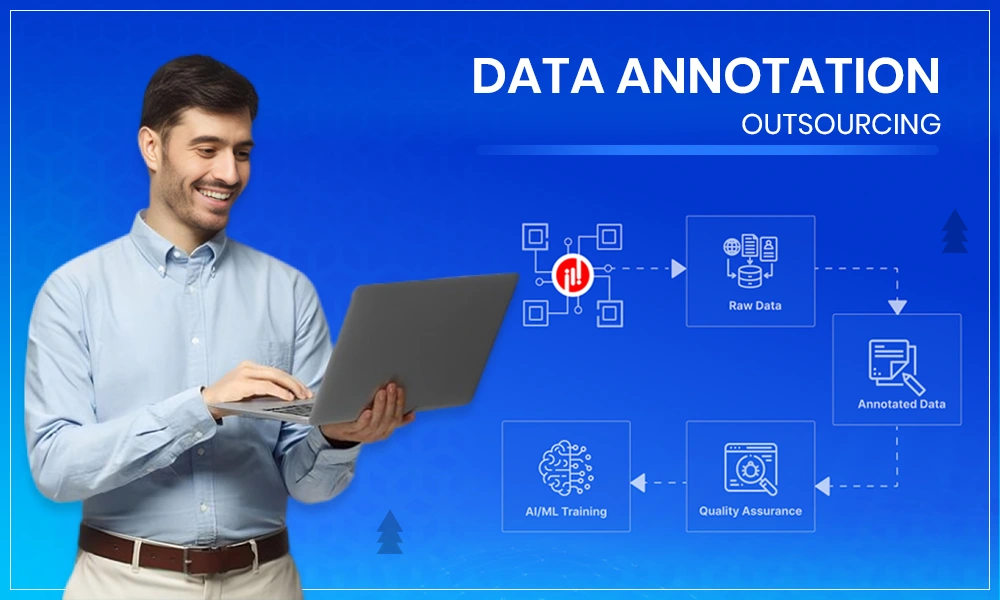
Are you watching competitors moving ahead with AI while your team struggles with the basics of data preparation? Data annotation outsourcing might be the answer you have been looking for.
The AI market is growing at unprecedented levels. Properly annotated data drives this boom. But many businesses overlook its importance. They don’t understand that even the most advanced algorithms cannot learn a thing without this crucial foundation. Think of a medical tool that misses a tumor because the training images were poorly tagged. Today, companies need a reliable data annotation partner to prepare high-quality training datasets for successful machine learning projects.
This blog explains why smart organizations choose to focus their resources on algorithm development while partnering with annotation specialists.
Why Data Annotation Is More Than Just Labeling
Tech leaders often see data annotation as a task of putting labels on raw data. This view is too simple. It ignores the hard work that makes AI function. Seeing it as a minor chore puts the whole project at risk of failing.
I. Role of Data Annotation in Machine Learning
Data annotation creates the foundation of AI development. It turns heaps of unstructured information into structured datasets that algorithms can understand and learn from. Algorithms need this vital step to spot patterns, make predictions, and deliver reliable results.
Data annotation has changed a lot over time to include:
- Creation of synthetic data to fill gaps in the training set.
- Use of human feedback to make model responses better.
- Rigorous quality checks to keep things consistent.
Machine learning systems need data that experts have labeled with care and structure. This process helps models comprehend the context, meaning, and connections in the data they process.
II. How Annotation Quality Affects Model Performance
AI models can only perform as well as their annotations allow. Research tells us that even small mistakes in annotation can considerably affect model outputs.
Mixed labels create errors. The system learns from them and then makes wrong predictions later when teams use them in real-life applications. To give an example, AI tools for healthcare that learn from badly labeled data may not be able to diagnose early-stage diseases.
Bad annotations cause trouble twice. They ruin model training first and then affect future predictions. This explains why many models pass lab tests but fail in the real world.
III. Why Annotation Is Often Underestimated
Teams often downplay data annotation. They focus a lot on model design but not so much on data quality. Several wrong notions about the annotation process cause this issue.
Many think data labelling is a one-time activity. They do not see it as an ongoing task that needs to be done as models evolve, and new data is produced. Its actual cost is also much higher than people think. Teams need to hire, train, and manage annotators.
Often, market competition pushes companies to skimp on annotation work. This rush costs more in the long run. Teams spend money on fixes and lose user trust when models do not work as expected.
Companies that understand the significance of annotation gain a big advantage. They build reliable AI systems that work well in the real world.
In-House vs Outsourced Data Annotation: A Comparison
Building an in-house annotation team or partnering with experts is a strategic decision. This choice affects your budget, timeline, and quality of AI models.
1. Cost Structure and Resource Allocation
Building an internal annotation team is expensive. Companies need to spend money on hiring, training, buying equipment, and setting up infrastructure. Sure, the initial costs run high, but over a period of time, they become self-reliant and spend far less on annotation.
Outsourcing data annotation is much cheaper. Companies pay just for the work they get. This model turns fixed costs into variable expenses that depend on project size.
Each path carries its own hidden costs, too. Data annotation outsourcing requires regular reviews and vendor management. Internal teams face ongoing expenses. Training and quality checks may cause companies to spend more than they originally planned.
2. Speed and Time-to-Market
Companies aim to take their AI solutions to the market swiftly. Recent research suggests that data preparation and annotation take up to 80% of AI project time. Setting up an in-house team to do this work can take a few months. Outsourcing partners can start the job in just one or two weeks.
External teams also scale projects better. They have an experienced workforce that’s always ready to expand with your growing needs. Internal teams, by contrast, struggle with sudden changes in workloads.
3. Data Security and Compliance
Security matters far more than costs for companies that handle sensitive information. In-house labeling offers complete control over data. It makes it easier for businesses to follow GDPR and HIPAA rules.
Bringing in a partner to handle this data creates risks. Many firms lack even basic data security practices in their annotation workflows, which is why partners must be chosen with care. Smart providers mitigate these issues with secure facilities and encryption.
4. Expertise and Quality Control
Quality directly affects the performance of AI models. Internal teams understand products deeply, due to which they respond better to feedback. Their institutional knowledge helps build accurate and high-quality models. But training them properly requires a lot of investment.
Professional data annotation companies use proven methods to check for errors, including peer reviews and automated testing. These steps help keep standards uniform in huge datasets spread across millions of files. Internal teams find it hard to remain consistent on such a large scale.
Ultimately, your choice depends on your specific scale and security needs. For a more detailed breakdown, read our comprehensive comparison of in-house vs. outsourced data annotation.
Strategic Benefits of Data Annotation Outsourcing
Organizations outsource annotation services for many reasons. The strategy helps them save money. But it also brings other advantages that can reshape their standing in the market.
I. Access to Skilled Experts
Data annotation companies offer access to experts with specialized knowledge that is difficult to develop internally. These providers work with thousands of vetted professionals who understand the nuances of complex fields like healthcare and finance.
They can identify dataset biases and create strategies to address them. Their deep knowledge leads to uniform labeling. This is especially useful for industry-specific terms and tricky visual patterns. For instance, a legal expert can make short work of complex contracts that a generalist would find confusing.
II. Support for Large and Complex Datasets
The global data collection and labeling market will reach $17 billion by 2030. The market grows at nearly 28% each year. These figures show how the demand for efficient annotation has been rising steadily.
Professional data annotation services quickly build teams to handle large volumes of training data. This removes bottlenecks that commonly impede internal operations. They can work with a variety of complex data, including text, images, videos, and spatial maps.
III. Faster Iteration and Model Improvement
Internal teams get to work on a model’s logic when external experts handle labeling and data preparation. This allows companies to complete projects and launch products sooner.
Many providers use active learning methods where AI models choose the most useful data points to annotate. This reduces labeling costs to a significant degree. Plus, the model improves faster because it gets high-quality data in a steady stream.
IV. Reduced Operational Costs
Companies get immediate access to experts without long recruitment cycles. They avoid the costs of managing the hardware and software required for annotation.
Their teams can work on innovative projects instead of getting burdened by routine tasks. They can also scale their AI solutions without straining their staff.
How to Choose the Right Data Annotation Company
Organizations need to study many aspects carefully before they choose a data annotation services provider. Decisions made in haste can affect the quality of your models. It can also raise the cost of your projects and create security risks.
I. Evaluating Industry Experience and Tools
Knowledge of specific industry verticals and technological capabilities matter a lot in data annotation. Providers with over a decade of experience offer many advantages. They have deep domain expertise and need less handholding. Their work also requires fewer revisions. Their teams have refined their methods by working on hundreds of assignments, and this saves you from tedious trial-and-error cycles.
The choice of tools also impacts the speed and quality of annotation. Professional providers usually have their own platforms with special features to handle complex tasks like 3D point cloud annotation. These platforms come with workflow management features that make project oversight easier and reduce administrative work.
Domain knowledge becomes particularly important in sectors like healthcare and autonomous vehicles. Partners who know industry regulations and jargon well help reduce labeling errors in complex datasets.
II. Understanding Pricing Models and Flexibility
Data annotation companies offer various pricing options: pay-per-label and project-based. Costs are aligned with the volume and complexity of annotations in the pay-per-label model. It works well for large projects where labeling requirements may vary from time to time. Project-based models involve paying a set fee for a specific amount of work, which makes budgeting much easier.
Price evaluation should go beyond basic rates. Teams need to check hidden costs, such as software licensing fees. Also, in some cases, very low prices may indicate that the work will likely be low-quality, and the data may have lots of mistakes. Fixing these errors may raise the overall cost of the service.
III. Assessing Quality Assurance Processes
Quality assurance methods determine how reliable annotations will be. Trusted providers use several layers of checks. They combine the expertise of human reviewers with automated checks. They may also use consensus scoring, where two people tag the same data to see if they agree. The label is likely correct if their answers match. Some of them also use gold standard tasks, where pre-labeled files are used to check if a worker is paying attention or needs more training.
Companies should look for providers who:
- Use scientific methods to check label consistency
- Rank annotators based on their performance
- Have dedicated processes to handle edge cases
IV. Ensuring Data Protection and Compliance
Security needs vary by industry and data sensitivity. It’s good to check both certifications (ISO 27001, SOC2, GDPR, HIPAA) and actual security practices when evaluating partners.
The provider should have secure facilities with restricted access. Their internal policies must cover confidentiality agreements and regular security training. Encryption, access control, and regular audits should also be in place to keep data secure.
For sensitive data, ask these key questions:
- How do they screen and verify annotators?
- What do they do to avoid data theft?
- Are their workstations secure and network-isolated?
- Do they follow the regulations in your industry?
Organizations that handle personal or health information require strict protection measures that help them meet relevant regulations.
Conclusion
Quality data annotation builds the foundation of any AI project. Companies must choose between building their own annotation teams or working with specialized providers. Outsourcing proves to be a better choice for those who want to make the most of their AI investments.
Data annotation outsourcing helps companies get specialized expertise and support for complex datasets. It makes the process faster and reduces manual tasks, and this allows internal teams to work on cutting-edge solutions instead of managing labeling workflows.
Remember that your algorithms are only as good as their training data. A strong partnership with the right annotation provider gives your AI project the base it needs to win in a crowded marketplace.

Internet, Software, Peripheral, Gadgets Expert